

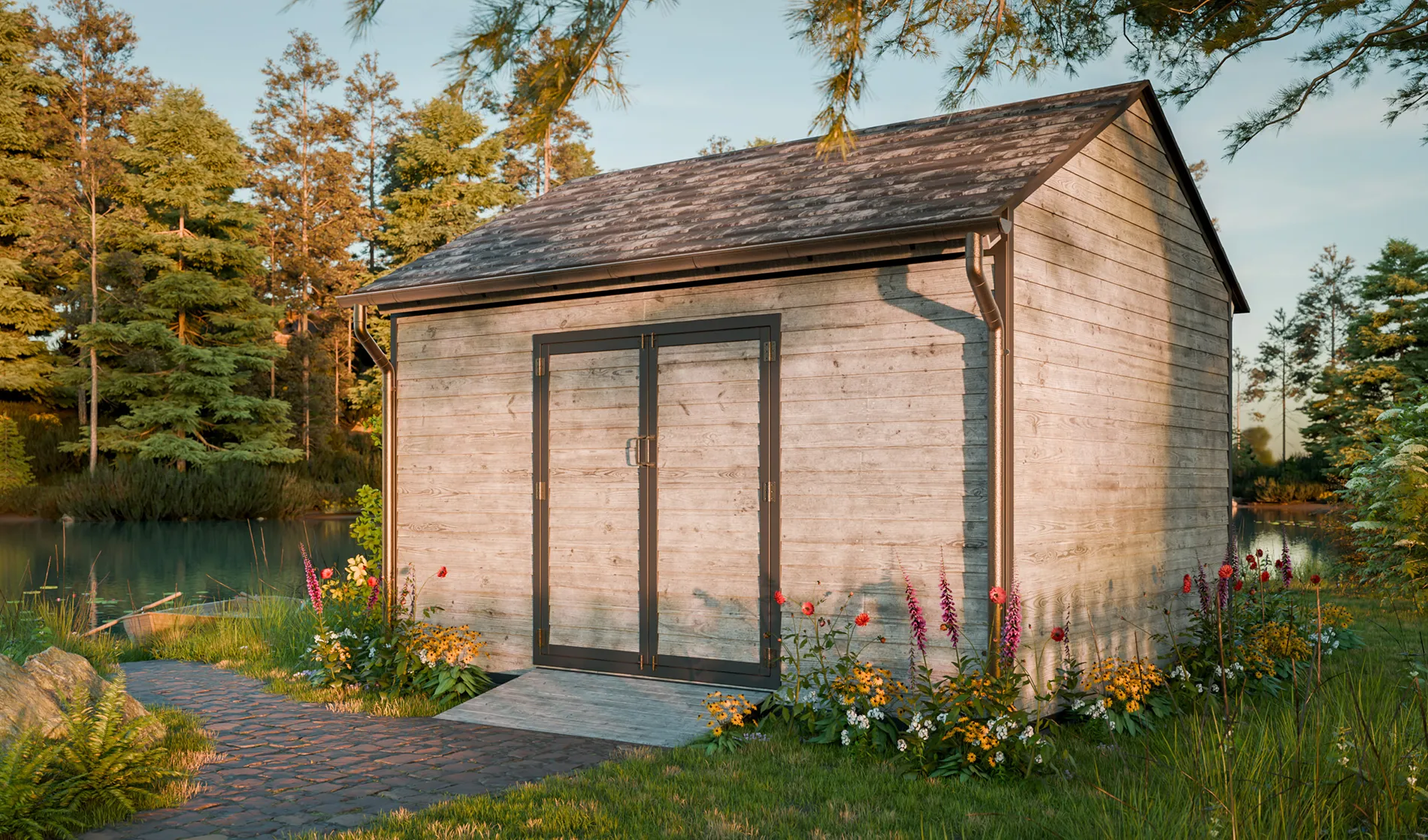
12x14 Gable Shed Plans Easy Build
A 168 sq ft gable with usable loft potential above the trusses, which is what makes it worth choosing over the same-dimension lean-to (SHED57). Permit required almost everywhere. Three weekends, $2,200–3,000, intermediate; rafter cuts and ridge set are where beginners burn time. Concrete piers or gravel skids both work for the foundation; slab if electrical is planned.

12x18 Gable Shed Plans with Wide Doors
216 sq ft with a wide front opening sized for a riding mower or ATV. Reinforced concrete is the foundation choice, since the door span and equipment weight push past what gravel-on-skids can handle. Permit needed in nearly all municipalities. Materials $3,000–4,200, three to four weekends with a helper. The width also makes it viable as a small workshop with bench space along one long wall.

10x12 Modern She Shed Plans with Extra Large Windows
Three oversized windows define this 120 sq ft plan, and they’re also why it isn’t a true beginner build. Each opening needs proper header sizing, flashing detail, and a drip cap, and the combined glazing area pushes the wall framing schedule slightly heavier than a plain storage shed of this size. 120 sq ft is also where many counties begin requiring permits, so check before ordering materials. Two to three weekends with a helper on the wall raise, $1,800–2,400 in materials. The 10×12 Lean-to Office (OFFI05) covers the same dimensions with much lighter window work if the glazing detail feels intimidating.
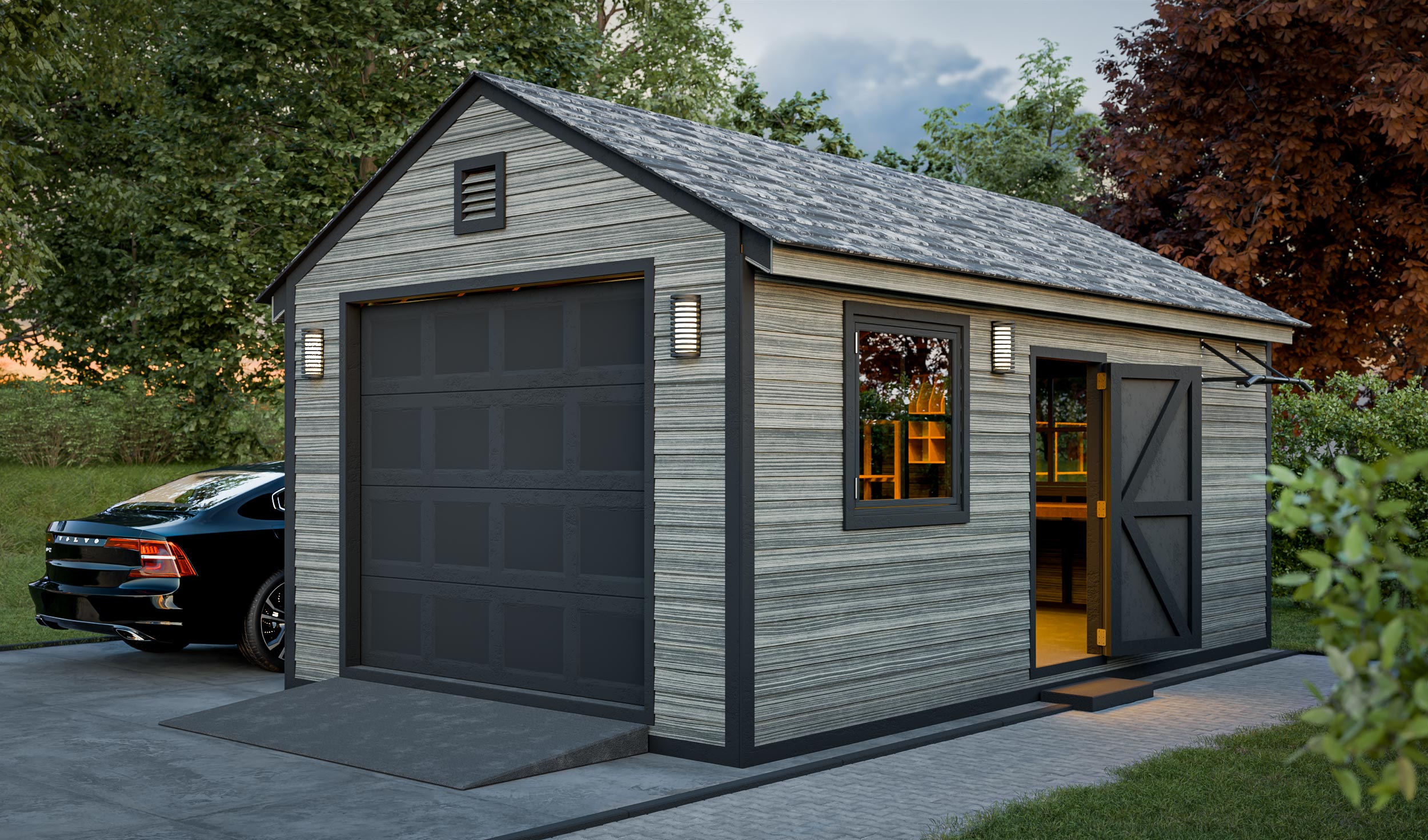
12x20 Double Door Garage Shed Plans
240 sq ft with an 8’×7’¼” front opening. Wide enough for a small car, a pair of ATVs, or a serious workshop layout with overhead door. Permit required almost everywhere, slab or thickened-edge slab foundation. Materials $4,000–5,500, four to five weekends, intermediate. The window placement leaves both long walls free for bench or storage runs.

12x24 Gable Roof Garage Shed Plans
288 sq ft gable garage with ramp access. Long enough for a small car plus workbench, or a serious workshop with vehicle access. Permit and inspections required everywhere. Materials $4,500–6,200, five to six weekends, intermediate-to-advanced. Slab foundation is the only realistic choice at this size.

30x40 DIY Garage Shed Plans
The biggest plan in the entire library at 1,200 sq ft. A three-car detached garage or substantial home workshop. Engineered drawings, permit, full inspection schedule, and likely a structural engineer’s sign-off depending on jurisdiction. Materials $14,000–22,000, ten to fourteen weekends with a crew, advanced. This isn’t a sensible first build; work up to it through smaller plans first.

DIY 4x6 Bike Storage Shed Plans
Holds two or three adult bikes with handlebars clear of each other. Shingle roof rather than corrugated metal, since bikes don’t tolerate water intrusion well. One weekend, around $500, beginner. No permit anywhere at this size.

24x24 Gable Roof Garage Shed Plans
The largest free plan in the library that still reads as a shed rather than a garage. 576 sq ft, gable roof spanning 24 feet, framing math to match. You’ll need engineered headers over the vehicle openings, a poured concrete slab (skids and gravel won’t carry this load), and a permit in essentially every US jurisdiction. Budget $8,000–14,000 in materials depending on regional lumber prices and roofing choice, six to eight weekends with a second pair of hands. If this is your first build over 200 sq ft, hiring out the slab is the right move. An out-of-level foundation compounds into every step that follows.

8x12 Gable Storage Shed Plans
Ninety-six square feet, comfortably under the 100 sq ft permit threshold most US municipalities use. The standard pick for homeowners who’ve outgrown a 4×8 but want to avoid the permit office. Two weekends, $1,000–1,500, beginner.

10x12 Gable Shed Plans
The poured concrete slab distinguishes this version from the lean-to plans at the same dimensions, and it’s the foundation to choose if conduit for electrical is in your future. 120 sq ft puts you in permit territory in most municipalities. Three weekends including slab cure time, $1,800–2,800, intermediate.

10x14 Gable Shed Plans Outdoor Workshop
Trusses give 140 sq ft of ground floor plus usable overhead loft storage. That overhead capacity is the case for picking the gable over a same-size lean-to. Permit required nearly everywhere at this size. Three weekends, $2,200–3,100, intermediate. Plan for a poured slab or piers, since gravel-on-skids becomes unstable at this size with overhead load.

10x16 Gable Roof Storage Shed Plans
At 160 sq ft you’re firmly in permit territory, and the gable provides respectable overhead clearance for vertical storage or hanging racks. Three to four weekends, $2,500–3,500, intermediate. The four extra feet of length over a 10×12 mostly matter for stowing 12-foot lumber or kayaks without diagonal placement.
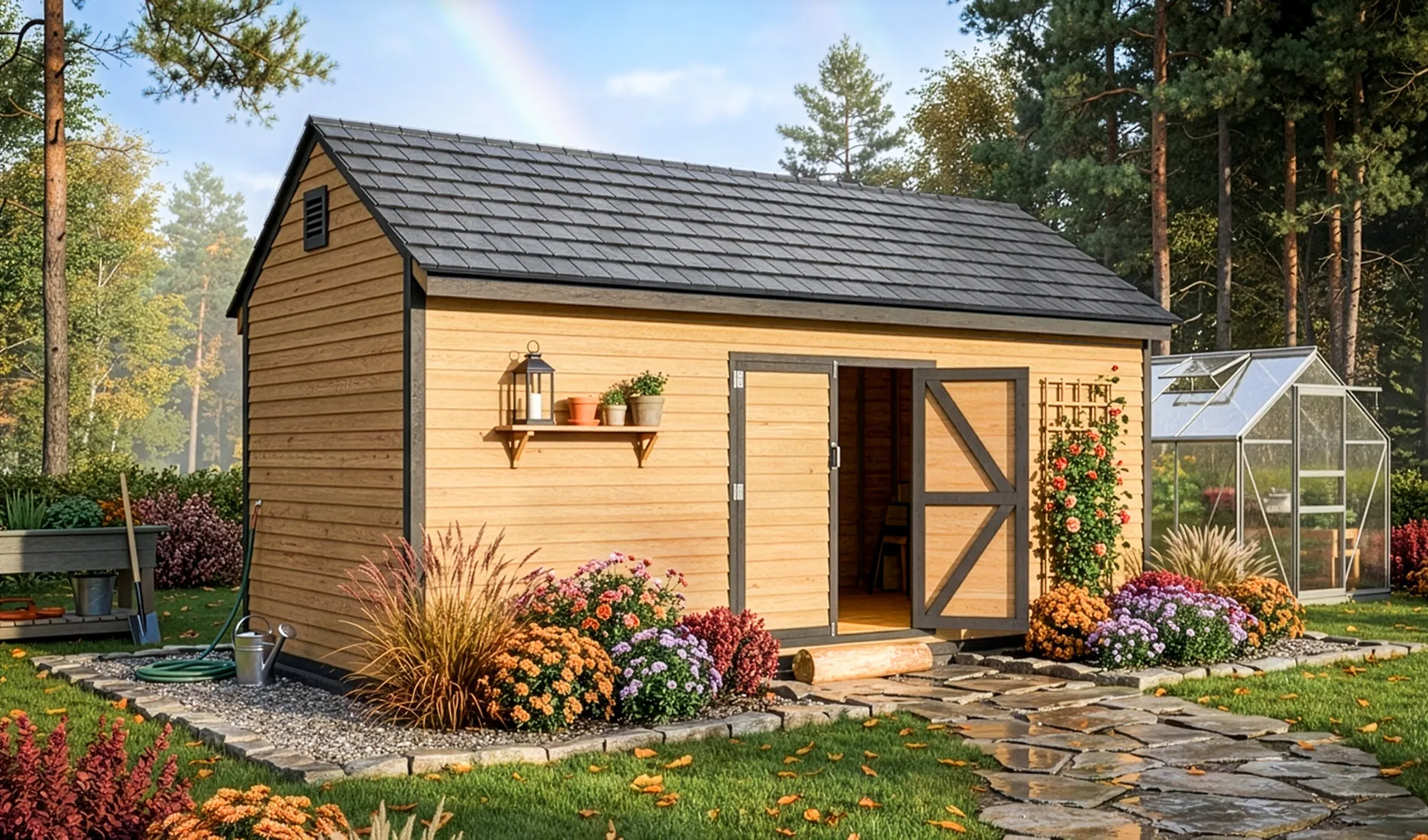
10x20 Gable Roof Shed Plans Large
200 sq ft is the threshold where many US jurisdictions require both a permit and framing-plus-final inspections. Double-wide door layout suits riding mowers or a small workshop with a roll-up entry. Four weekends, $3,000–4,200, intermediate-to-advanced due to the wider span. Concrete slab is the right foundation.

12x12 Storage Shed Plans with Gable Roof
The workhorse 144 sq ft for tools, mower, bikes, and a workbench in one space. Permit usually required at this size. Two and a half weekends, $1,900–2,700, beginner-to-intermediate. If overhead loft storage matters more than floor area, the 10×14 (SHED73) trades some floor for overhead capacity at similar materials cost.

12x16 Gable Shed Plans Tool Storage
192 sq ft is roomy enough to function as a hobby workshop, home gym, or office without feeling cramped. Permit required almost everywhere. Four weekends, $2,800–3,900, intermediate. The gable version makes more sense than the equivalent lean-to (SHED55) when loft storage or a finished ceiling matters.

12x16 Garage Shed Plans Double Door
192 sq ft with double doors and vehicle access. Narrower than a true single-car garage, but workable for a compact car, motorcycle storage, or a workshop where you want to roll a vehicle in for maintenance. Slab foundation, building permit, likely an inspection. Materials $3,000–4,300, four weekends, intermediate.

12x24 Gable Shed Plans with Double Door
Seven-foot walls and loft potential are the case for choosing this version over a same-size lean-to. You get standing-height storage under the loft plus a usable second level above. Permit and inspections required. Five weekends, $4,000–5,800, intermediate.

16x24 Large Gable Roof Garden Shed Plans
At 384 sq ft this is nearly garage-sized. You’re effectively building a small outbuilding rather than a shed, with full permit and inspection requirements (framing and final) and a slab foundation. Materials $6,500–9,500, five to seven weekends with a helper. The ramp and door layout suit garden equipment and small tractor storage; for a workshop instead, the 16×20 (SHED33) drops the ramp.
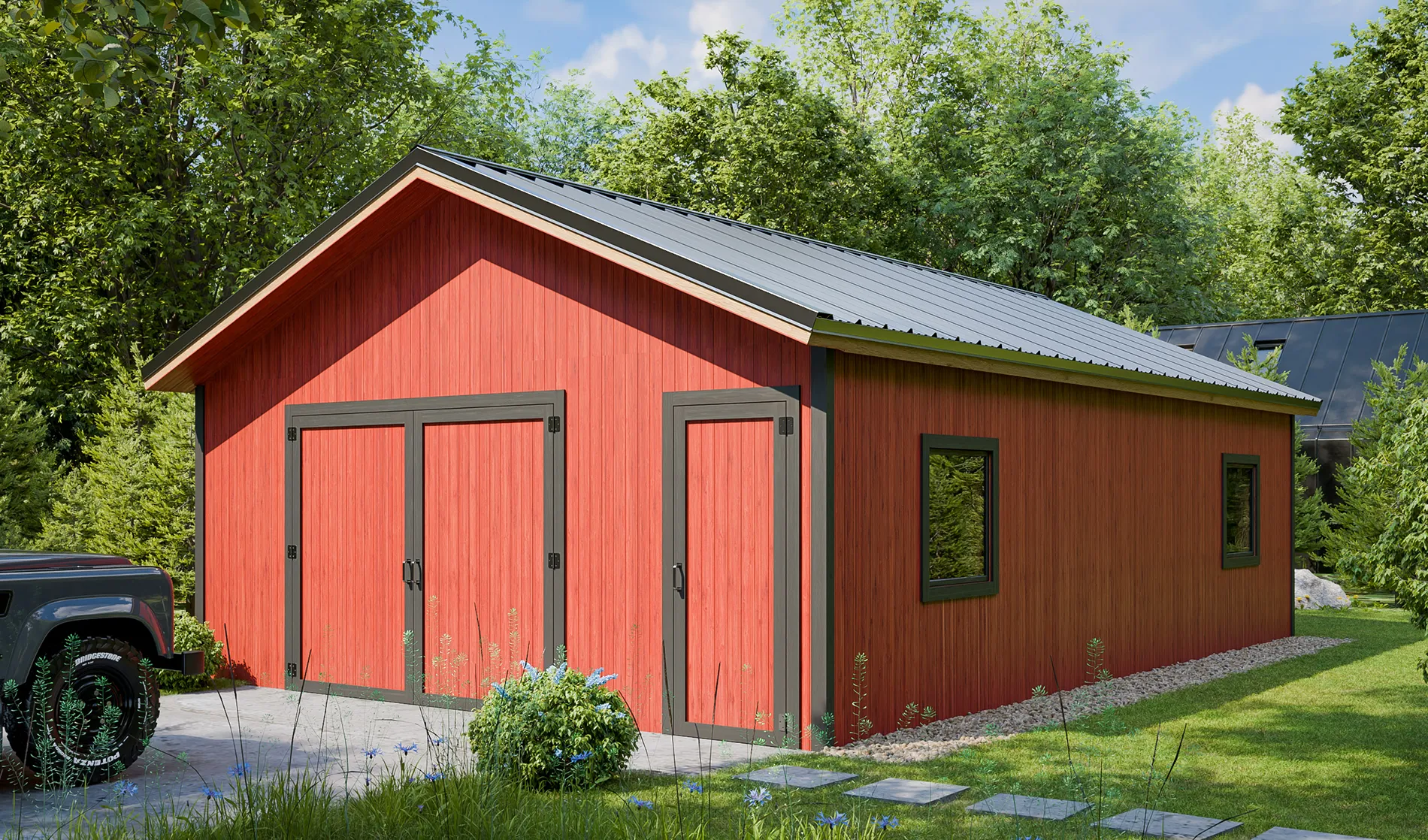
20x30 Garage Shed Plans Double Door
600 sq ft with wide access doors and a side entry. Effectively a two-and-a-half-car garage or a serious workshop. Permit, inspections, engineered slab. Materials $9,000–14,000, seven to nine weekends with help, advanced. The rustic exterior is cosmetic; the real structural challenge is the roof span and door headers.

8x16 Gable Workshop Shed Plans
The 16-foot length on a gable roof combines usable workshop floor with overhead storage above the trusses for seasonal items. Three weekends, $1,500–2,300, intermediate.
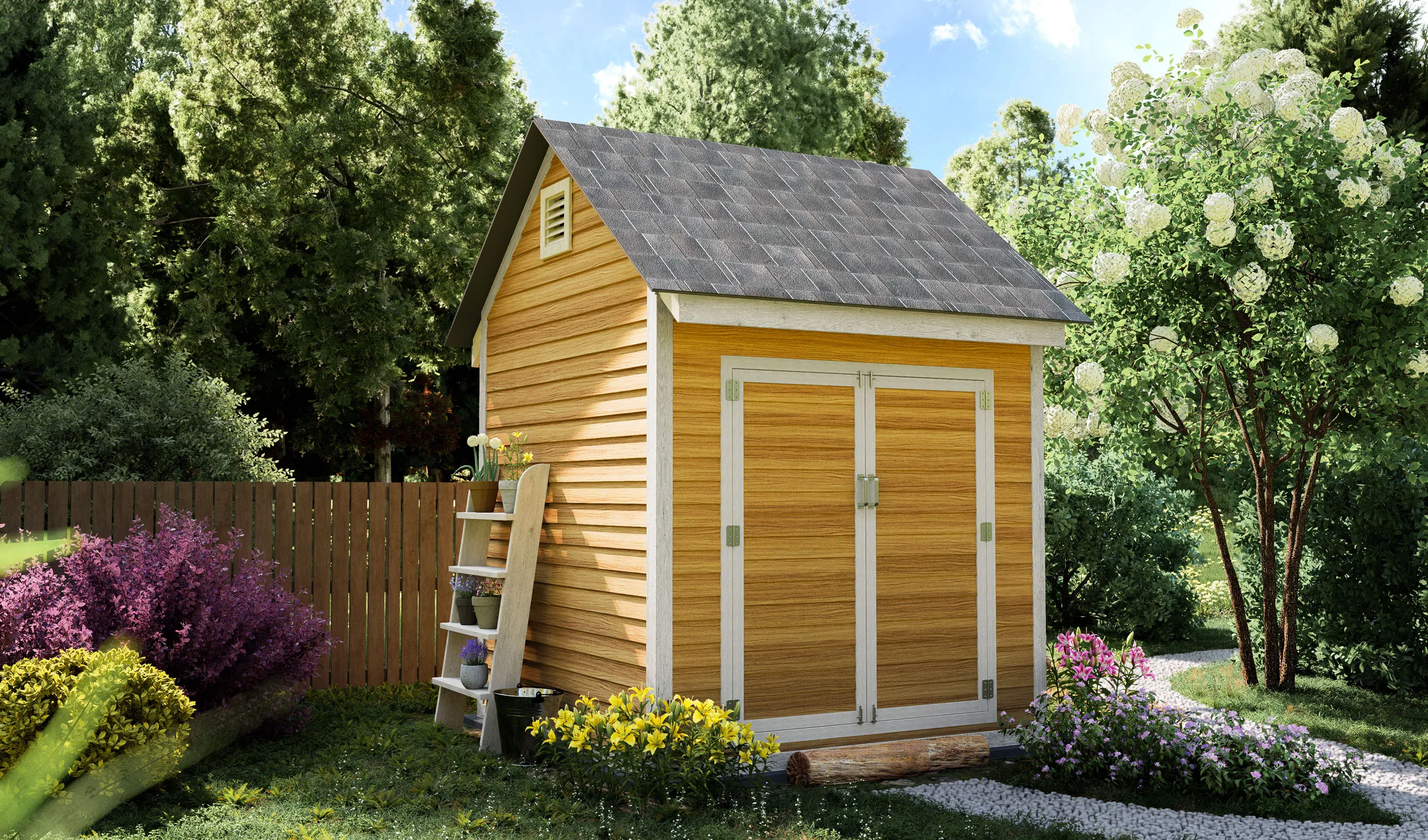
8x8 Gable Roof Shed Plans Backyard
At 64 sq ft this build stays just under the permit threshold used in most US municipalities (worth verifying locally, but you’ll likely skip the paperwork). Gable framing adds a few hours over a lean-to of the same dimensions; the centerline headroom matters when rakes or step ladders need to store vertically. A weekend and a half with hand tools and a circular saw, $700–900 in lumber, OSB, and three-tab shingles. Good first build for someone who’s framed a wall but never cut rafters.

12x20 Gable Shed Plans Backyard Workshop
240 sq ft gable with a 64-inch double door. Sized for a serious home workshop with bench space along one long wall and tool storage along the other. Permit, inspections, slab or pier foundation. Materials $3,500–4,800, four to five weekends, intermediate. The gable height leaves room to add loft storage later without reframing.

16x20 Garage Shed Plans Double Door
320 sq ft with an 8-foot-wide access opening. Wide enough for one full-size car with comfortable room around it, or two compact cars in tandem parking. Slab foundation mandatory, permit and inspections everywhere. Materials $5,500–7,500, five to six weekends, intermediate-to-advanced.
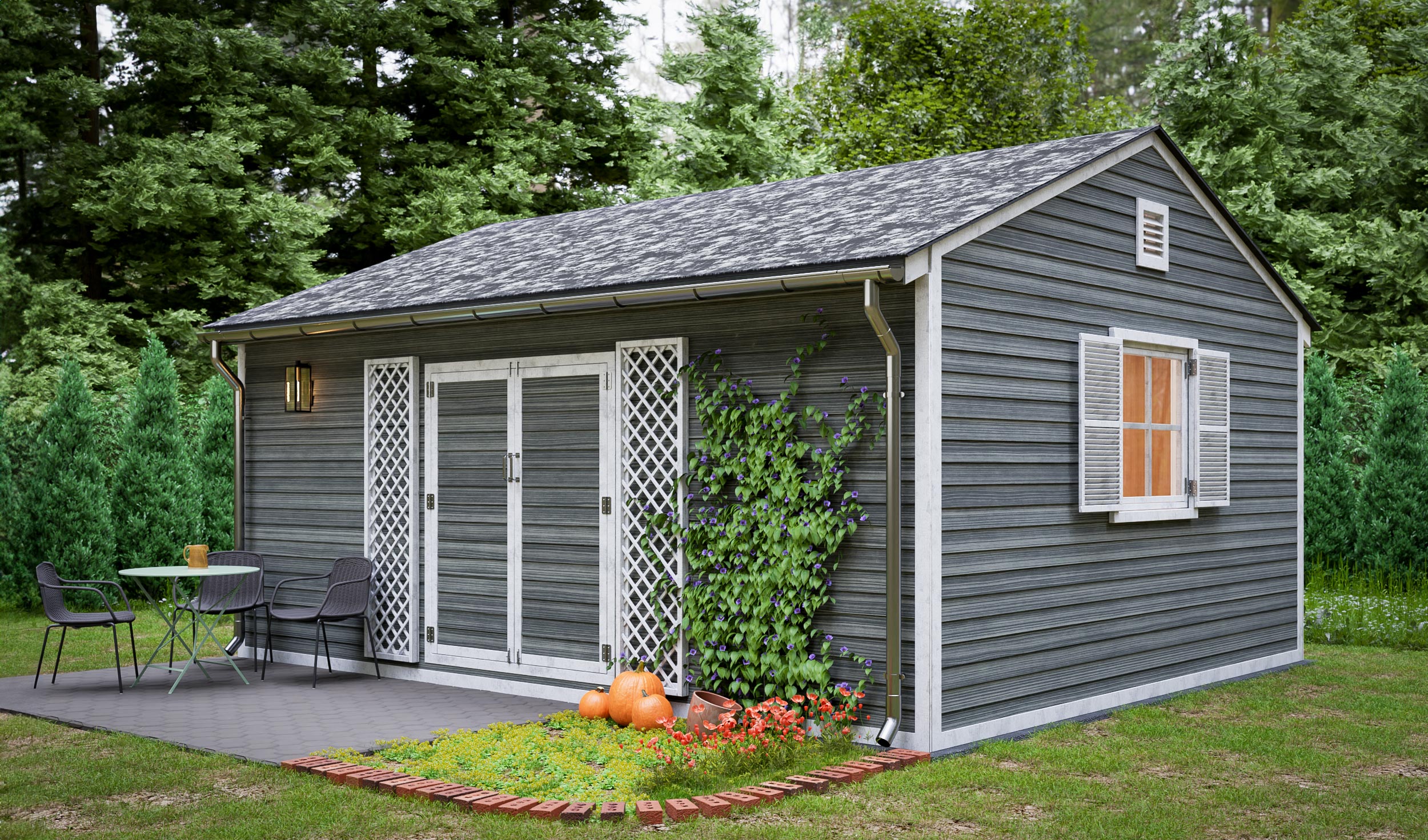
16x20 Workshop Shed Plans Gable Roof
320 sq ft gable workshop without the vehicle-door layout of the garage version (GARA03). The trade is wall space for benches and tool storage instead of width for vehicle access. Permit, inspections, slab. Materials $5,000–6,800, five weekends, intermediate.

4x6 Small Yard Storage Shed Plans
Same 24 sq ft as SHED28 but with a peaked roof and two gable vents. Worth choosing the gable when humidity is a concern, or you’re storing anything moisture-sensitive. One weekend, $400–600, beginner.

4x8 Gable Roof Wooden Shed Plans
The gable peak gives 32 sq ft usable headroom that a lean-to of the same dimensions wouldn’t have. Workable for tool storage or a kid’s playhouse conversion. Skids on gravel, one weekend, $450–650, beginner.

6x10 Gable Shed Plans Small Outdoor
Seven-foot walls on a 60 sq ft frame give enough vertical clearance to feel like a real small structure rather than a glorified closet. Usable as a tiny office, hobby room, or storage with hanging racks. One and a half weekends of work, $700–1,000 in materials, beginner level. Permit-free in most places.
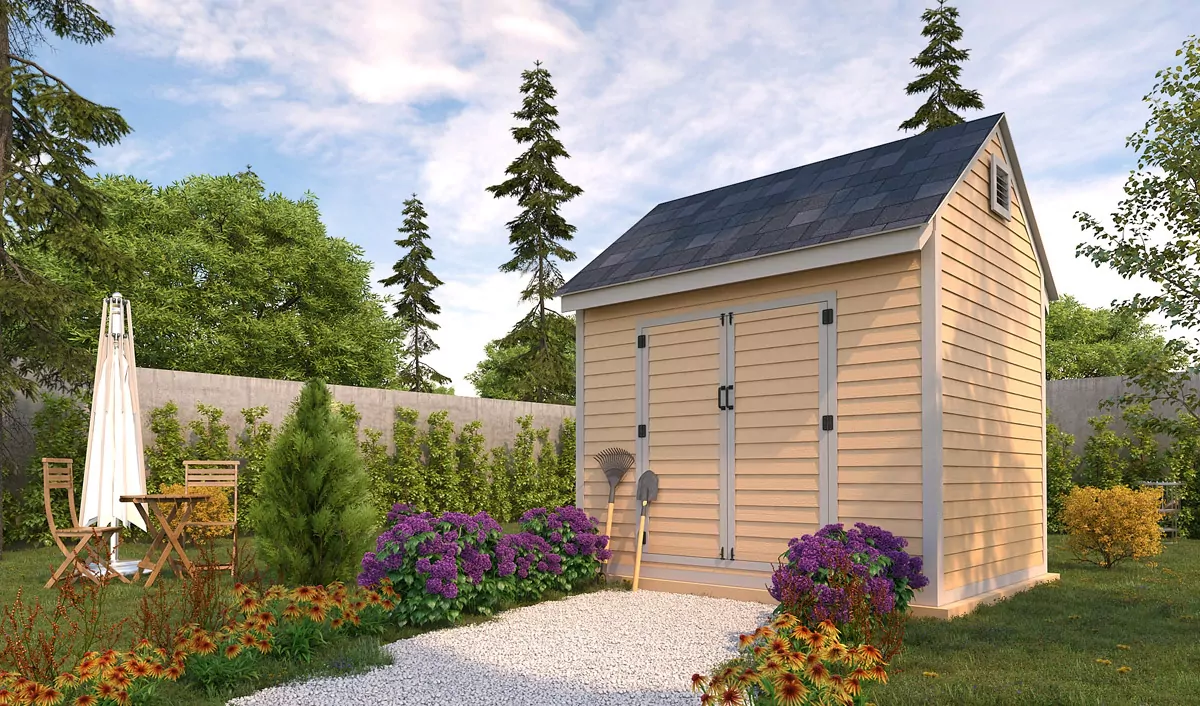
8x10 Wood Storage Shed Plans DIY
Eighty square feet of ground floor plus overhead loft storage, which is what justifies the extra framing work compared to the lean-to alternative (SHED15) at the same size. Useful for seasonal items that don’t need daily access. One and a half weekends, $900–1,300, beginner.

DIY 10x20 Garden Shed Plans with Porch
A 200 sq ft gable storage shed with a covered porch on the short end. The porch is what separates this from plain 10×20 plans (SHED65, SHED67). Permit and inspections at this size everywhere. Four weekends including porch framing, $3,200–4,500, intermediate.

Easy to Build 10x10 Storage Shed Plans
A 10×10 build sits exactly at the permit boundary used in many US municipalities. Some towns exempt up to 100 sq ft, others up to 120, so verify locally before ordering materials. Customizable interior layout, with shelving runs along both long walls. Two weekends, $1,200–1,800, beginner.

Gable Roof 6×8 Bike Storage Plans Protect & Organize
Four to six bikes with vertical wall mounts. The gable height supports hanging bikes by their frames rather than parking them on the floor. One weekend, $550–800, beginner. Stain or paint after assembly to match house trim.

Large 16x24 Garage Shed Plans
384 sq ft garage with reinforced ramp. Sized for one full-size vehicle plus workshop, or a serious hobby workshop with vehicle access. Engineered slab, permit, inspections. Materials $6,000–8,500, six to seven weekends, advanced.

Simple 6x8 Garden Tool Shed Plans
Seven-foot walls and gable vents on a 48 sq ft frame. Adequate for hand tools, a small workbench, or as a starter chicken coop with minor modifications. One weekend, $600–900, beginner. Permit-free in most places.