Sheds

How Much Does it Cost to Build a Shed?

Author profile picture Written by Craftcamp On July 18, 2025 • 19 min read

KEY POINTS

  • DIY sheds: $500 to $2,000
  • Shed kits: $1,500 to $5,000
  • Professional Installation: $3,000 to $10,000 or more

Costs for building a shed can vary, but the average you can expect is between $2,000 and $5,000. Whether you need to organize the chaos of a cluttered garage or create a dedicated space for a hobby, the price depends heavily on your approach. DIY builds for smaller sheds can be less, starting around $500. Large sheds, professionally built sheds, or sheds designed as extended living space with extra amenities like electricity, plumbing, or heating and cooling can cost between $5,000 to $10,000, or even more. Here’s a quick breakdown of average costs:

Shed Cost Comparison Summary

To help you budget effectively before diving into project details, here is a high-level summary of total project costs based on the build method you choose.

Build Method Low Range (Budget) Average Range High Range (Premium)
DIY Build (Scratch) $500 – $1,200 $1,500 – $3,500 $4,000 – $8,000
Prefab Kit (DIY Assembly) $1,500 – $2,500 $3,000 – $6,000 $7,000 – $12,000
Professional Build (Turnkey) $3,000 – $5,000 $6,000 – $12,000 $15,000 – $30,000+

Below, we’ll dig into the specifics so that you can better estimate costs for materials, labor, and hidden fees.

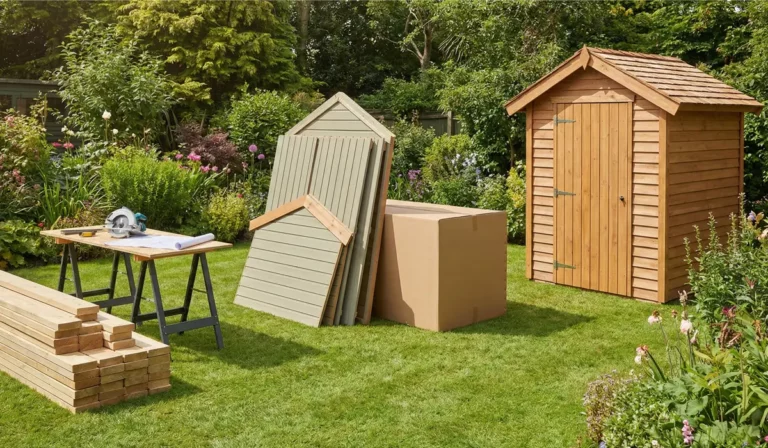
Comparison of DIY lumber, prefab shed kit, and built shed in a garden
A visual comparison showing three shed construction methods side-by-side: raw materials for a DIY build, flat-pack components of a prefab kit, and a completed professional build.

What is the Average Cost to Build a Shed in Different Sizes?

The single biggest factor that affects the cost of a shed is its size. To build a larger shed, you’ll need more materials, stronger foundations, and if hiring a contractor to build or install it, more labor hours. Here is a breakdown, now including delivered pre-fab options:

Shed Size DIY Starting At Kit Starting At Pre-Fab Delivered Pro Starting At
6×4 (24 sq. ft.) $500 $1,500 $2,200 $3,000
8×6 (48 sq. ft.) $560 $1,600 $2,400 $3,500
8×8 (64 sq. ft.) $620 $1,700 $2,600 $3,800
8×10 (80 sq. ft.) $680 $1,800 $2,900 $4,000
10×10 (100 sq. ft.) $750 $1,900 $3,200 $4,500
12×12 (144 sq. ft.) $830 $2,100 $3,800 $5,500
10×16 (160 sq. ft.) $920 $2,300 $4,100 $5,800
12×16 (192 sq. ft.) $1,000 $2,500 $4,600 $6,600
10×20 (200 sq. ft.) $1,350 $2,750 $5,200 $6,800
12×20 (240 sq. ft.) $1,500 $3,300 $5,800 $7,500
16×24 (384 sq. ft.) $2,000 $5,000 $8,500 $10,000

What Factors Affect the Cost to Build a Shed?

Apart from size, which we covered above, several other factors will affect the cost of your shed project. These include the construction method, material choices, foundation types, any tools you may need, and permits, if your jurisdiction requires them. Below, we’ll break down what to expect for each of these.

Regional Cost Variations

While national averages provide a baseline, your geographic location can dictate a price swing of 20% to 40% regarding the final invoice. This variance is driven by labor markets, transportation logistics, and local supply chain volatility.
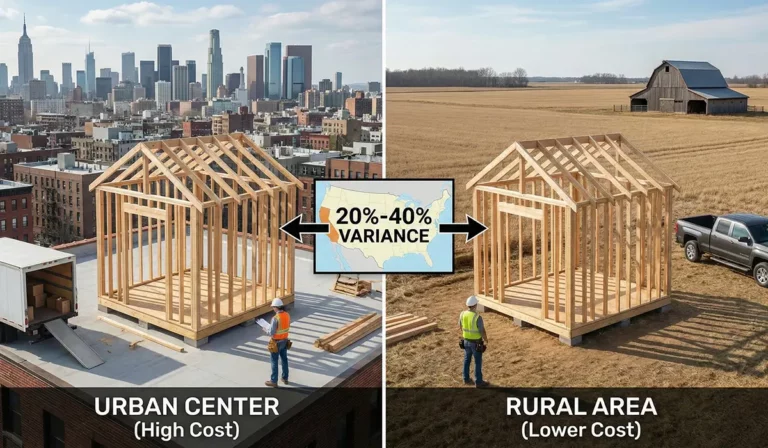
Split image comparing shed construction in a city and a rural field
A visual comparison illustrating regional cost differences for building a shed.

For example, building a shed in an urban center like San Francisco or New York can cost significantly more than the same structure in rural Midwest areas due to higher labor rates and stricter code requirements. Furthermore, lumber price volatility remains a regional concern; areas prone to wildfires or supply chain bottlenecks may see sudden spikes in framing costs. When budgeting, always check local availability of materials and adjust your estimates based on your specific zip code.

Construction Methods: DIY vs. Kit vs. Professional

You can save money if you’re willing to learn how to build a shed as a DIY project. Based on our chart above, DIY sheds cost about a third of sheds that you can build from a kit, and about 17% of what it would cost to hire a contractor to build the shed for you.

Kits cost more because the materials all come pre-cut, pre-sized, and in some kits, components like rafters or even wall assemblies are pre-assembled, which increases production costs while reducing the amount of labor that you’ll need to do. Packaging and delivery costs are another reason why kits cost more.

Professional contractors can either scratch-build sheds using the same materials that you would as a DIYer, or you can hire them to assemble a kit. Either way will be much more expensive than a DIY build because of the labor costs that you’ll need to pay.

However, the difference between hiring a contractor to scratch-build a shed versus hiring a contractor to assemble a kit will be minimal. The high price of the kit offsets labor costs.

Pre-Fab Delivered Sheds vs Building On-Site

A popular middle ground between DIY and expensive custom builds is the “Pre-Fab Delivered” shed. These are constructed in a factory and delivered to your home on a flatbed trailer. While convenient, they have distinct pricing structures compared to on-site builds. A typical 8×14 pre-fab unit often costs significantly less than a custom build because the factory labor is efficient and materials are bought in bulk. However, site access is the limiting factor, if a truck cannot drive into your backyard, you cannot use this option.
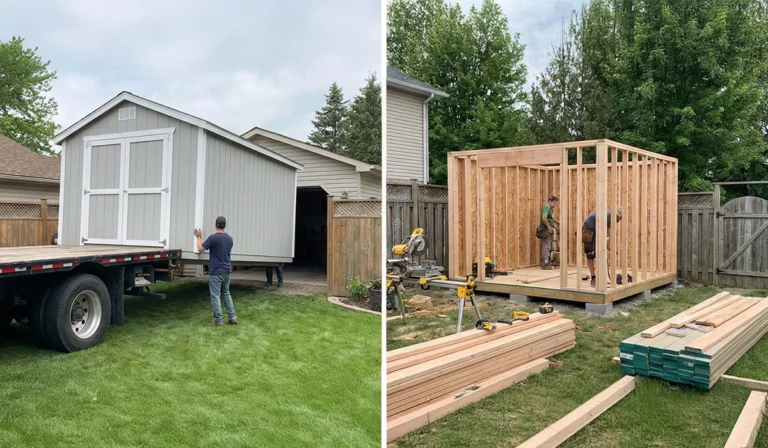
A side-by-side infographic comparing two shed building methods
Split comparison of a prefab shed being delivered by truck versus an on-site custom shed build framing.
Feature Pre-Fab Delivered (8×14) Custom Built On-Site (8×14)
Average Cost $3,400 $5,200+
Installation Time 1-2 Hours 3-5 Days
Customization Limited (Packages) Unlimited
Site Access Requires 10ft+ wide clear path Standard gate access

Material Choices and Amenities

One of the biggest cost variables is your choice of materials. For framing, untreated 2×4 lumber is the most affordable and widely used option. If you need more durability or structural strength, consider pressure-treated lumber or upsizing to 2×6 or 4×4. When visiting a home improvement store, checking the “Cull Lumber” bin for specials can sometimes yield usable pieces at a discount. You might also consider an alternative like metal framing or composite materials if wood prices in your area are high.

For sheathing, oriented strand board (OSB) is the budget-friendly choice, though plywood offers greater moisture resistance. Asphalt shingles remain the most cost-effective roofing option, while metal roofing lasts longer but comes at a higher price. Flooring ranges from simple leveled earth or plywood to durable, but costly, concrete slabs.

There are also a multitude of siding options to consider:

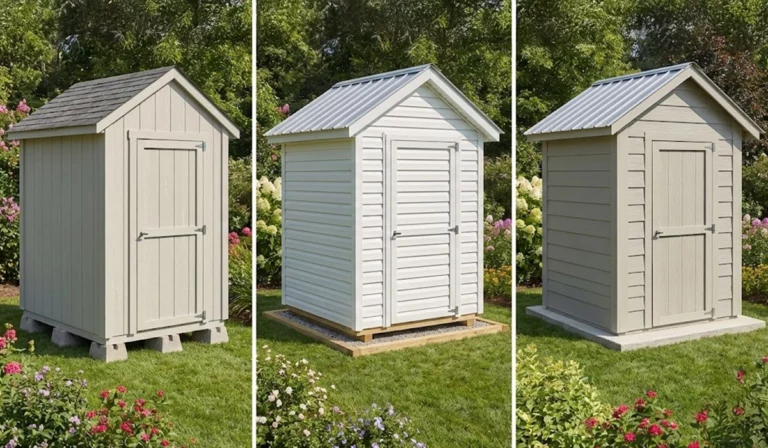
  • T1-11 (a type of plywood with a textured, beaded surface) is among the most common siding choices because it’s inexpensive and attractive. However, it does require refinishing every few years, and it’s susceptible to moisture damage.
  • Vinyl costs more initially, but unlike T1-11, it doesn’t require painting over the years, and won’t take moisture damage. It is more easily damaged by wind, hail, and impacts.
  • Fiber cement siding is another popular choice. Compared to T1-11 and vinyl siding, it’s the most expensive of these options, but it offers good moisture resistance and enhanced durability against wind, hail, and impact damage.
Three main siding types: T1-11 Plywood, Vinyl, and Fiber Cement
The visual difference between the three main siding types (T1-11 Plywood, Vinyl, and Fiber Cement)

Roof Style Impact on Shed Costs

The shape of your roof is not just an aesthetic choice; it is a primary driver of labor costs and material waste. Understanding the geometry of labor costs can help you balance budget with storage needs.

  • Lean-To (Skillion): This is the cheapest option. It uses a single slope, requiring no complex cuts or trusses. It is the most cost-efficient design for DIYers.
  • Gable Roof: The standard triangle shape. It is moderately priced but requires creating trusses or cutting rafters to meet at a ridge board.
  • Gambrel (Barn Style): This style offers the highest “cost per cubic foot of storage” efficiency but comes with a high labor premium. A Gambrel roof features two slopes on each side, which maximizes vertical space for a loft without expanding the shed’s foundation footprint. However, the complex geometry requires significantly more cuts, gusset plates, and assembly time, often increasing labor costs by 20-30% compared to a gable roof.
  • Hip Roof: The most expensive option. All four sides slope downward, requiring complex framing and more waste in roofing materials (shingles/metal). This is purely aesthetic and adds no extra storage utility.
Lean-To (Skillion), Gable Roof, Gambrel (Barn Style) and Hip Roof
Different types of shed roofing: Lean-To (Skillion), Gable Roof, Gambrel (Barn Style) and Hip Roof

In addition to the basic building materials listed above, be sure to also consider any extras that transform a shed from a box into a functional space. Examples include windows, lighting and electrical work, heating or cooling systems, insulation, and plumbing if you plan to install a sink for an outdoor kitchen or potting station. You may also want to budget for interior finishes like flooring, blinds or other window treatments, and exterior paint. Proper venting, such as ridge vents or gable vents, is also critical for controlling temperature and moisture but adds to the material list.

How Much Does Land Preparation Cost for a Shed?

Before you lay a single block, you must address the site conditions. The longevity of your structure depends entirely on stable soil. Ignoring this step can lead to structural warping or flooding. Common site prep costs include:

  • Grading and Leveling ($1 – $3 per sq. ft.): If your build site has a slope, you will need to excavate or bring in fill dirt to create a level plane. This cost range depends on the accessibility of your yard for heavy machinery.
  • Tree and Stump Removal ($200 – $2,000): Clearing vegetation is non-negotiable. Small stumps might cost a few hundred dollars to grind, while removing a mature tree that threatens the structure can cost upwards of $2,000 depending on the tree’s height and diameter.
  • Drainage Solutions ($500 – $1,500): If your yard pools water, you must install drainage before building. Installing a French drain or dry well system typically costs between $500 and $1,500. This investment prevents water from undermining your foundation.

Foundation Types and Site Preparation

A foundation is essential to provide your shed with a stable base that ensures long-term structural integrity. For a deeper dive into the physics of base stability, check out our guide on shed foundation options. Common choices include:

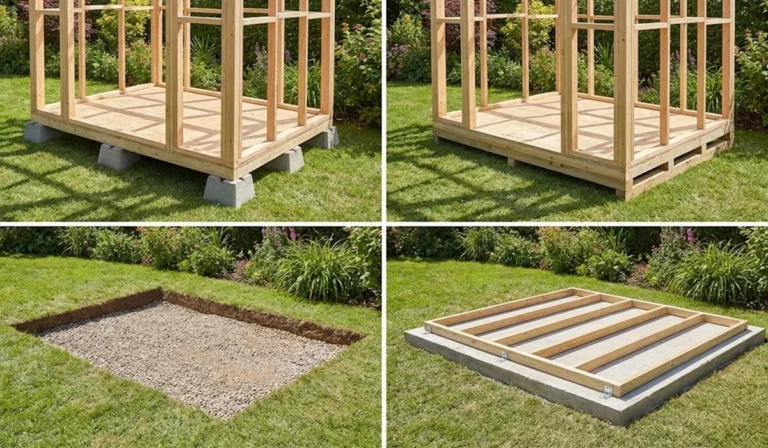
  • Deck blocks or skids: The least expensive option, these consist of pre-cast concrete blocks or pieces of 4×4 lumber placed directly on the ground to support the structure.
  • Gravel pad: This option costs more than deck blocks or skids because it requires significantly more site prep. You cannot simply dump gravel on grass. You must excavate the area down to at least four to six inches to remove organic topsoil and replace it with compacted 3/4-inch clean gravel. This layer acts as a capillary break, preventing ground moisture from wicking up into your floor frame and rotting the wood from below. While simple to DIY, this type of foundation is prone to shifting as the gravel and soil beneath compacts with time.
  • Concrete slab: This is the most expensive option, but also the most durable. A concrete slab is a poured section of concrete that creates a stable base that you can anchor the shed to, and once the shed is completed, it will also serve as the shed’s floor.
Shed foundation options comparison: deck blocks, timber skids, gravel pad, and concrete slab
A visual guide comparing four common shed bases: simple deck blocks, movable skids, a prepared gravel pad, or a permanent concrete slab.

Utility Installation Costs

If you plan to use your shed as a workshop, home office, or “she-shed,” adding utilities transforms the project from simple storage to a habitable accessory structure. These amenities add significant value but come with their own cost range.

Warning: The Utility Conversion Threshold
Before you add wires or pipes, understand the risk of the “Utility Conversion Threshold.” In many municipalities, adding permanent electricity and plumbing reclassifies your shed from a simple “accessory structure” to “habitable space.” This designation is a massive cost cliff. Once classified as habitable, the structure may legally require a frost-protected foundation (concrete footings 36″+ deep), R-value compliant insulation, and fully permitted electrical work by a licensed master electrician. These requirements can easily triple your project cost, pushing a $4,000 shed toward the $12,000+ range. Always check your local zoning codes for the definition of “habitable space” before installing permanent utilities.

  • Electrical ($500 – $2,500): Running a trench from your main panel to the shed, installing a sub-panel, and wiring outlets and lights typically falls in this range. Costs increase if your shed is far from the main house, requiring heavier gauge wire to prevent voltage drop.
  • Plumbing ($1,000 – $3,000): Connecting a sink or toilet involves trenching supply lines and, more critically, tying into your sewer or septic system. This is complex work that almost always requires a licensed plumber.
  • Mini-Split HVAC ($2,000 – $5,000): For climate control, a ductless mini-split system is the gold standard. While energy-efficient, the unit and professional installation can drive up your budget significantly.

Tools and Equipment

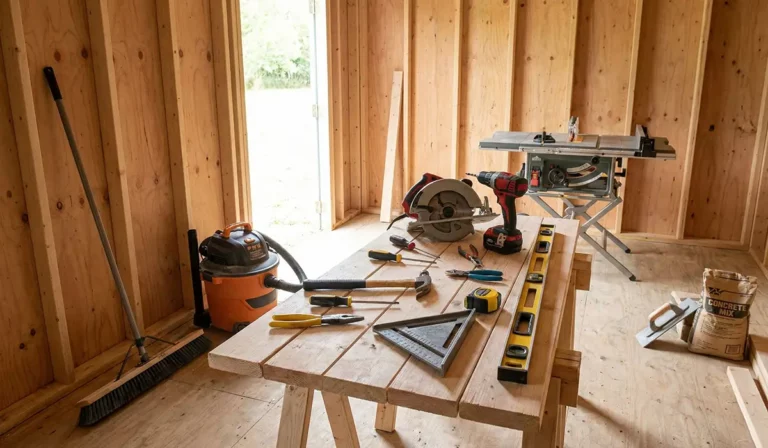
If you’re installing the shed yourself, you’ll need some basic tools. A circular saw ($50–$150), a drill ($50–$200), and common hand tools like a hammer, screwdrivers, and pliers (around $50 total) are essential. You’ll also need measuring tools such as a tape measure, speed square, and level, which can add another $50 to your budget. Don’t forget cleaning supplies for the job site, such as a shop vac or heavy-duty broom.

Tools and Equipment for building a shed
A practical selection of power tools, hand tools, and measuring equipment needed for building a shed.

Depending on the foundation that you choose, you may also need to rent a mini excavator, or you may need to invest in trowels, floats, and forms to properly lay a concrete pad. Appliances for the workshop, like a table saw, can speed up the build but aren’t strictly necessary for assembly.

Permits, Setbacks, and Inspections

The rules for shed permits vary widely from one jurisdiction to another. In many areas, you may not need a permit at all, while in others, it’s a strict requirement. Some jurisdictions don’t require permits for small sheds, but do require them for sheds above a certain size.

Crucially, a permit is not your only concern. You must strictly adhere to property line “setbacks”, typically 3 to 5 feet from your boundary. A zoning setback violation is a critical failure mode. Building within this exclusion zone often results in forced demolition, making the project cost effectively infinite. Always verify where your home property lines are before breaking ground.

To find out whether a permit is required, check your city or county government’s website. You will typically need to contact the building and planning & zoning departments. These are distinct offices: Planning & Zoning approves where you can build (setbacks, height restrictions), while the Building Department ensures how you build meets safety codes.

Shed Inspection Costs and Requirements

If your shed requires a permit, it will likely require inspections. Understanding this process prevents work stoppages.

Shed Inspection Costs and Requirements
If your shed requires a permit, it will likely require inspections.
  • Typical Fees ($50 – $500): Inspection fees are often bundled with the permit cost, but re-inspections for failed work can incur additional fees of $50 to $100 per visit.
  • When Required: Inspections typically happen at three stages: footing/foundation (before pouring concrete), framing/rough-in (before closing walls if adding electric/plumbing), and final completion.
  • Scheduling: You must proactively schedule these with the Building Department. Failure to do so can result in having to tear down drywall to prove the wiring behind it is safe.

Hidden Cost Factors and Smart Design Principles

Beyond the sticker price of materials, there are several “invisible” factors that dictate the final cost and longevity of your shed. Understanding the physics of construction can save you money and prevent future headaches.

Dimensional Modularity

Construction materials, specifically lumber & composites, come in standard 4×8-foot sizes. This concept is called dimensional modularity. If you choose to build an odd-sized shed, such as a 9×9, you are building “off-module.” This increases costs significantly because you have to cut standard sheets, creating waste and adding labor hours for the cuts. Efficient costs only exist at 2-foot increments (e.g., 8×10, 10×12). An 8×10 shed often costs less to build than a 9×9 shed because it utilizes full sheets of plywood with zero waste.

The 120 Sq Ft Rule

In many jurisdictions, there is a strategic threshold known as the 120 Sq Ft rule. Structures under this size (commonly 10×12) often do not require a building permit. By keeping your footprint just under this limit, you can save hundreds of dollars in filing fees, inspection costs, and project delays. Always confirm this with your local building department.

The Service-Liability Delta

If you choose not to DIY and instead buy “Installation” services from a major retailer, you will notice a premium on the labor cost. This is the service-liability delta. The surcharge pays for the retailer’s liability shield, insurance, and contractor vetting, not just better materials. This ensures that if the contractor damages your property or home decorations during the build, you are covered.

Roof Overhang Protection

One pro tip to extend the life of your shed is to ensure you have adequate roof overhangs. Extending the roof eaves by 6 to 12 inches costs minimal lumber but prevents water from running down the siding. This simple design choice can double the lifespan of your exterior paint and siding.

Shed Cost Examples

Once you’ve decided on a construction method and added any extras, how much does a shed cost? To give you an idea of how costs can add up, here are a few examples with itemized project details.

Small 4×6 DIY Garden Shed

For a 4×6 shed that has a minimum 8-foot ceiling, the total average cost will be around $500. This entry-level project is perfect for beginners. Here is the cost breakdown:
  • Framing Lumber: 2×4 framing, with material costs starting around $11 per square foot (labor not included). Total: ~$264.
  • Siding: T1-11 siding, which starts at $0.90 per square foot. Total: ~$100.
  • Roofing: Asphalt shingle roof materials, which starts at $1.25 per square foot. Total: ~$40.
  • Foundation: Eight deck blocks, which average $10 a piece. Total: $80.
  • Hardware: Up to $50 for hardware, including fasteners plus hinges and a latch for the door.

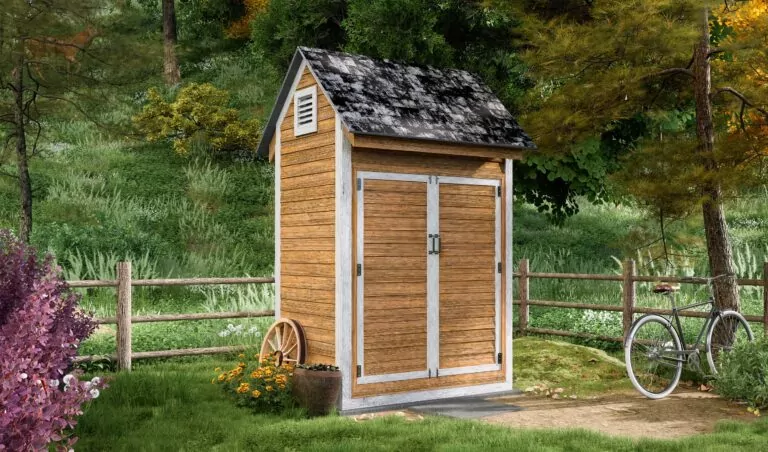
Small 4x6 shed design

Craftcamp’s small 4×6 shed is suitable for garden tools, bikes, and other storage needs

Medium-Sized Shed From a Kit

Let’s say you’re building a shed from a kit. It’s a 10-foot by 10-foot shed, and you’ve shopped around and found a kit for $1,900 that has everything you need, including a skid foundation. If you plan to build the kit yourself, then that will be your final cost.

However, if you hire a contractor to build it for you, expect to pay a minimum of $50 an hour for labor for a minimum of eight hours, which will add $400 to your cost for a final total of $2,300.

Medium 10x10 shed design

Craftcamp’s mid-size 10×10 garden shed – ideal for storing mowers and other outdoor equipment

Professionally Built 16×24 Shed

For a professionally built 16×24 shed featuring vinyl siding, a gable roof, and a concrete slab foundation and floor, you can expect to pay the following. Note the significant labor and finish costs in this high-end build:

  • Lumber Package: 2×4 framing, with material costs starting around $11 per square foot. Total: ~$4,200.
  • Exterior Finish: Sheathing and vinyl siding materials, which start at $3 per square foot. Total: ~$1,150.
  • Roofing System: Gable roof materials, which start at $1.25 per square foot. Total: ~$500.
  • Foundation: Concrete slab foundations cost about $5 per square foot. Total: ~$1,920.
  • Windows: Two vinyl windows, which start at $400 each. Total: $800.
  • Doors: Double doors, which start at $1,500 each. Total: $1,500.
  • Hardware & Misc: Up to $150 for hardware, including fasteners plus hinges, and a latch for the door.
  • Professional Labor: Labor, which starts at $50 an hour. For this example, hiring two workers for five 8-hour days would add approximately $4,000 to your total.

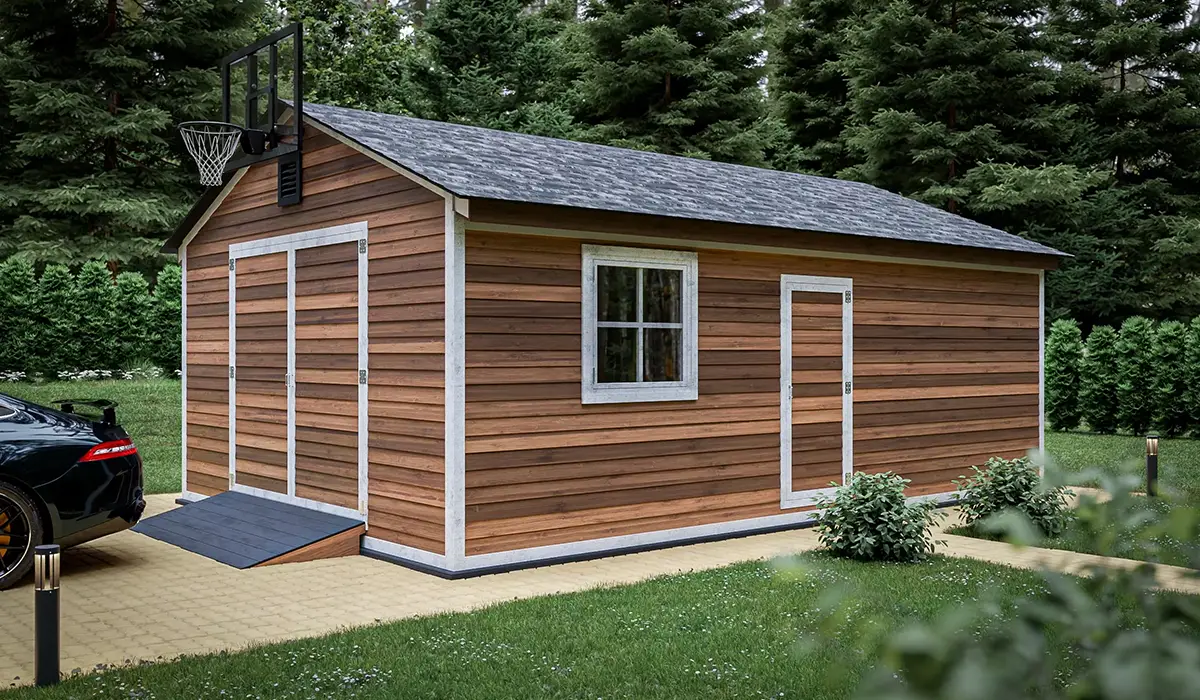
16x24 DIY garage shed

Craftcamp’s gable garage 16×24 shed can be used as a garage, a workshop, or a home office, as well as to store outdoor equipment

How to Save Money on the Cost to Build a Shed

If you’re not careful, your shed installation cost can get out of control quickly. To keep your project in line with your budget, use the tips below:

  • Identify the purpose of your shed and keep the design simple. If you only need basic storage, skip the extras like electric service and stick to a straightforward layout without complex roof lines.
  • If you can, go the DIY route to save a large amount on labor costs. Pro Tip: When DIY framing, you must square the floor frame before attaching plywood. Measure the diagonals of the frame; if they aren’t equal, the roof sheets won’t align later.
  • Spend plenty of time shopping around for the best deals on materials. Even a small price difference on something like individual 2x4s can add up to a large cost savings, especially when building a larger shed that requires materials in bulk amounts.
  • Consider using reclaimed materials or visiting stores that sell salvaged or surplus building materials (like Habitat for Humanity Restore locations) for deep savings on building materials.
  • Look for Credit Card Services or store cards that offer financing or cash back on large purchases, which can effectively lower the material cost.
  • If hiring a professional, get quotes from multiple contractors to compare prices.

Frequently Asked Questions About Shed Building Costs

1. Can you build a shed for $1,000?

Yes, but it will likely be under 160 square feet, you’ll need to handle all of the labor yourself, and you’ll likely need to use basic construction materials like asphalt roofing shingles and T1-11 siding.

2. Is it cheaper to build your own shed or buy one?

It costs an average 33% less to build your own shed rather than buying a kit.

3. How much money do I need to build a shed?

It depends on size and features. A small shed might cost as little as $500, while larger or custom sheds with electrical or concrete foundations can exceed $10,000. Most mid-sized sheds fall in the $2,000 to $5,000 range.

4. How much does it cost to make a 12×12 shed?

Prices start around $830 for a DIY 12×12 shed using basic materials. Kits in this size start at $2,100, and professionally built 12×12 sheds will start around $5,500.

5. How much would it cost to build a 20×20 shed?

A 20×20 shed will measure 400 square feet, putting it on the large end of the scale in terms of floor space. DIY builds using basic materials will start around $2,000, and basic kits for sheds in this size will start around $5,000. Expect to pay $10,000 or more for a professionally built 20×20 shed.

6. What is the average price to build a shed?

The average range for a shed is between $2,000 and $5,000. This is for a mid-sized shed between 100 to 160 square feet.

7. How much does it cost to build a shed with electricity?

Adding electricity to a shed typically costs between $500 and $2,500 depending on the distance from the main panel and the complexity of the wiring. Simple overhead lighting and a few outlets will be on the lower end, while 50-amp sub-panels for heavy workshop machinery will push costs higher. Remember that electrification may trigger different building codes.

8. Is it cheaper to build a shed or buy a pre-made one?

From a strict cash outlay perspective, building it yourself is the cheapest option, costing about $15-$20 per square foot. Buying a pre-made (delivered) shed costs approximately $25-$40 per square foot. However, the “cheapest” option changes if you value your time, DIY builds can take 40+ hours, whereas a pre-made shed is ready to use instantly.

Ready to Build a Shed? Browse Our Free Plans!

Building a shed doesn’t have to be difficult or enormously expensive. Start by browsing shed ideas to get inspired. When you’re ready to begin, you’ll need some tools, a little know-how, a budget for building supplies, and a great design.

We can help you get started with the design. Our free shed plans cover everything from compact garden storage to spacious backyard workshops. Each plan includes a materials list, step-by-step building instructions, and beginner-friendly diagrams to guide you from start to finish.