
Building a greenhouse is an exciting endeavor, whether you’re taking the construction of it into your own hands or hiring a professional. But before you begin, it’s essential to know the cost of a greenhouse and the budget you should expect in undertaking this project. Below, we’ve broken down the cost of a greenhouse, factors that impact the overall price, and ways to save money. You’ll also learn about the benefits of different types of greenhouse plans.
How Much Does It Cost to Build a Greenhouse?
Most greenhouses cost $5 to $35 per square foot, or anywhere from $1,000 to $30,000+, depending on size, materials, and installation method. A small DIY greenhouse using plastic sheeting might cost as little as $1,000, while a fully equipped glass greenhouse with heating and ventilation can exceed $30,000, especially if you go down the route of hiring a contractor.
Greenhouse costs also vary based on how you build it: from-scratch DIY, pre-made kits, or turn-key custom builds.
- DIY Build: $500–$1,500 – lowest cost, most effort
- Kit: $2,000–$5,000 – moderate cost and convenience
- Pre-Built: $10,000–$35,000+ – highest cost, least effort

These figures reflect the initial build only, but don’t forget to consider additional costs, such as labor (if you’re not DIYing), permits, heating, and long-term maintenance based on your climate and setup.
Pro tip: Use the greenhouse cost calculator to estimate your specific costs by size, style, and features.
Factors That Impact Greenhouse Price
Knowing what impacts the cost of building your greenhouse will help you price it out as accurately as possible. Now that you know the average costs for materials and greenhouses of different sizes, you can explore the other factors that impact your budget. This ranges from insulation needs to permits to frame type.
Size and Layout: How Dimensions Impact Cost
Smaller greenhouses cost less upfront but tend to have a higher cost per square foot due to fewer material efficiencies, bulk discounts, and shared fixed costs like permits and foundations.
Here’s a quick comparison:
| Greenhouse Size (sq ft) | Total Cost (USD) | Cost per sq ft (USD) |
| 100 | $2,000 | $20.00 |
| 500 | $7,500 | $15.00 |
Larger greenhouses help distribute fixed costs across more space, reducing your cost per square foot even if the total investment is higher.
Structure Style: Freestanding vs. Attached
The design of your greenhouse will also impact the overall cost. There are two main types: freestanding greenhouses and lean-to greenhouses.
Freestanding greenhouses are standalone structures that offer full access to sunlight and airflow from all directions. They’re ideal for larger gardens and serious growers, but require a full foundation, which can add $500 to $2,000+ to your total cost.
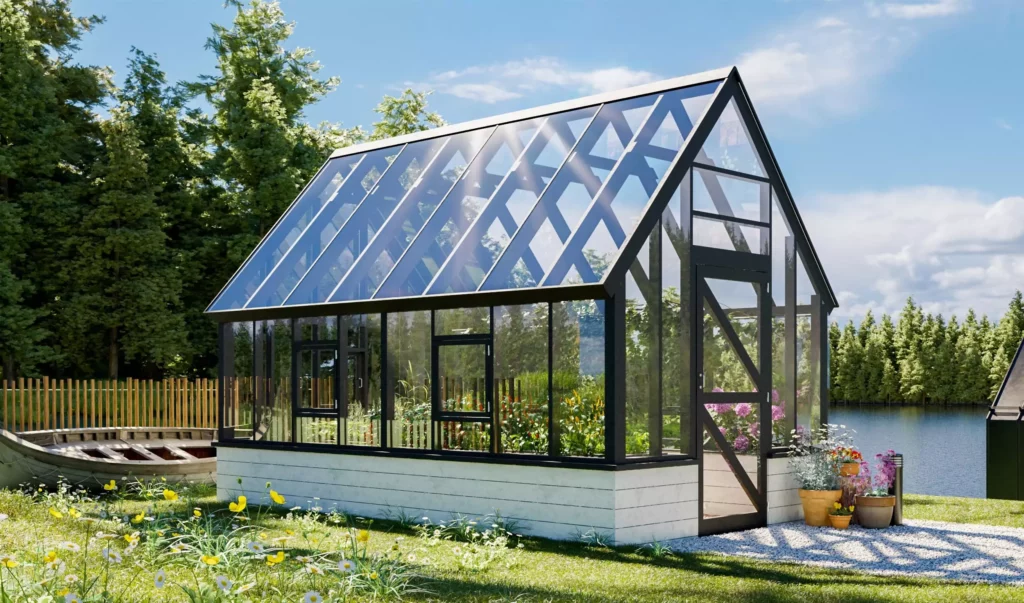 Craftcamp Large Greenhouse Plan 10×16 With Polycarbonate Cover & Raised Beds
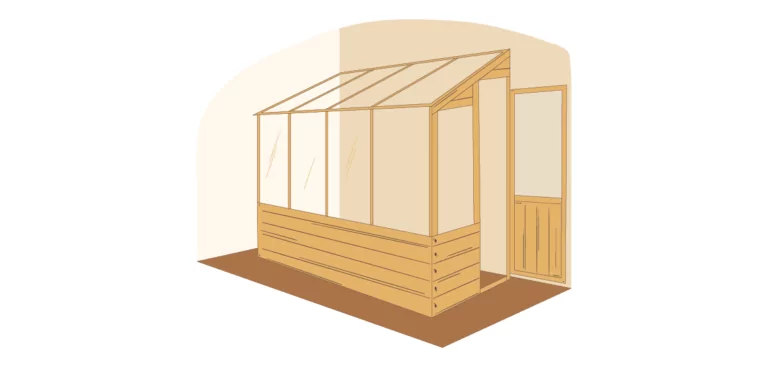
Lean-to greenhouses are built against an existing wall, which reduces how much material and insulation you’ll need. These models typically cost 20%–30% less than freestanding designs and are better suited for small yards or colder climates where sharing heat with a nearby structure is a plus.
Foundation Costs: Gravel vs. Concrete vs. Piers
Every greenhouse needs a flat, stable foundation to support the structure and protect it from moisture or the ground shifting. Foundation costs typically range from $2 to $10 per square foot, with the final price influenced by factors like greenhouse size and soil conditions.
Common foundation types include:
- Gravel base: Inexpensive and easy to install, especially for small DIY builds. It might require leveling and doesn’t retain heat.
- Concrete piers: Good for uneven ground and allows for drainage and stability without a full slab.
- Full concrete slab: Highest upfront cost, but offers the best durability, pest resistance, and heat retention. This is important in colder climates.
To choose the right base, consider your budget, climate, and whether you’ll need to expand or move the structure later on.
Climate and Insulation: What to Expect by Region
Your local climate will greatly influence both the type of greenhouse you choose and the long-term costs. If you’re in a colder USDA zone (Zone 5 or lower), your greenhouse will need specific upgrades to maintain growing temperatures and prevent heat loss.
Essential Upgrades:
- Double-wall polycarbonate glazing: Adds insulation. Cost: $1,000–$2,000.
- Thermal glass panels: Offers superior heat retention. Cost: $2,000–$3,000.
- Heating system installation: Required for winter growing. Cost: $500–$1,500.
- Foundation insulation: Helps reduce heat loss from the base. Cost: $300–$800.
These upgrades may add $1,000 to $3,000 to your initial setup but often pay for themselves, reducing heating costs by 40-60%, according to Virginia Cooperative Extension.
If your garden sits in Zone 7 or warmer, you may only need basic glazing and passive ventilation in your greenhouse, reducing both upfront and maintenance expenses.
Materials: Frame and Glazing Costs
Materials make a huge difference in durability, insulation, and final price. Both the glazing (walls and roof) and the frame type affect the total cost of greenhouse construction.
Glazing Options: Film vs. Polycarbonate vs. Glass
| Material | Cost Impact | Pros | Cons |
| Polyethylene Film | Low | Very affordable, flexible, easy to replace | Short lifespan (2–5 years), tears easily |
| Polycarbonate Panels | Moderate | Durable, good insulation, lightweight | Less clear than glass, higher cost than film, lasts up to 15 years |
| Glass Panels | High | Excellent light transmission, visually appealing | Heavy, fragile, expensive |
Pro Tip: Glass is the most durable option, often lasting over 30 years with proper care. Factoring in material lifespan helps estimate the true annual cost of your greenhouse.
Frame Types: PVC, Wood, Steel, or Aluminum?
| Material | Cost Impact | Pros | Cons |
| PVC Frame | Low | Lightweight, cheap, won’t rust or rot | Low strength, degrades under UV, not suitable for large builds |
| Wood Frame | Moderate | Natural look, customizable, easy to find locally | Needs regular sealing or treatment to resist rot and pests |
| Galvanized Steel Frame | Moderate to High | Strong, durable, resists corrosion in most climates | Can corrode in coastal/humid zones, heavier than aluminum |
| Aluminum Frame | High | Lightweight, rust-resistant, low-maintenance | Conducts heat and cold, may require insulation |
Keep in mind that a $5,000 polycarbonate greenhouse with a 15-year lifespan comes out to about $333 per year in depreciation, while a $10,000 glass structure over 30 years also equals $333 per year. Same annual cost, different upfront investment.
Pro tip: Using mixed materials, like wood frames with polycarbonate glazing, can give you a custom look while keeping your greenhouse construction costs under control.
Labor Costs: DIY vs. Professional Builds
It’s true that labor is one of the most variable greenhouse costs, but it’s also one of the easiest areas to save. Here’s a quick comparison of DIYing your own greenhouse or hiring a contractor.
Building it yourself:
- Can reduce your total investment by $1,000 to $5,000 or more
- Best for smaller greenhouses (under 300 sq ft)
- Potential downsides: delays, misaligned framing, or wasted materials, especially for beginners.
Professional greenhouse installation:
- Typically ranges from $2,500 to over $10,000
- Custom or high-end builds can cost significantly more
- The biggest benefit is having a skilled professional responsible for construction
Pro tip: Use our free DIY greenhouse plans with step-by-step instructions to reduce guesswork, lessen stress, and minimize errors.
Permits and Building Code Requirements
Before starting construction, check with your local city or county office to understand zoning rules, building codes, and setback regulations. Here are the basics to keep in mind:
- Permits may not be required for small greenhouses under 120 sq ft, especially if they’re not connected to utilities.
- Permits are usually required for greenhouses over 120 sq ft, those built on permanent foundations, or structures with electrical or heating systems.
- Costs typically range from $50 to $500, depending on size, required inspections, and local laws.
- Timelines: Getting a permit can add 1 to 4 weeks to your project.
Skipping the permit can lead to fines or even forced removal of the structure.
Greenhouse Cost Breakdown: Line-by-Line Budgeting
Seeing a line-by-line budget makes it easier to plan realistically and prioritize what matters most for your space, climate, and the purpose of a greenhouse.
Here’s a detailed overview of greenhouse construction prices by feature:
| Feature / Material | Estimated Cost Range | Notes |
| Frame (wood, aluminum, PVC) | $200 – $2,000+ | PVC is the most affordable; aluminum is more durable but higher priced |
| Glazing (plastic film, polycarbonate, glass) | $100 – $1,500+ | Pricing varies by size and insulation performance |
| Foundation | $150 – $1,000 | Gravel is budget-friendly; concrete offers long-term durability |
| Doors, vents, fans | $50 – $500 | Important for airflow and temperature regulation |
| Heating system (optional) | $200 – $2,500 | Required in cold climates to keep plants thriving year-round |
| Shelving and storage | $50 – $300 | Optional add-on for better organization and vertical growing space |
| Labor (if not DIY) | $500 – $5,000+ | Varies determined by design complexity and local contractor rates |
| Permits (if required) | $50 – $500+ | May vary by size and location |
| Estimated Total | $1,300 – $13,300+ | Based on design choices, materials, and whether you DIY or hire help |
If you’re wondering how these individual expenses add up within a typical project, the chart below shows how costs are usually distributed by category.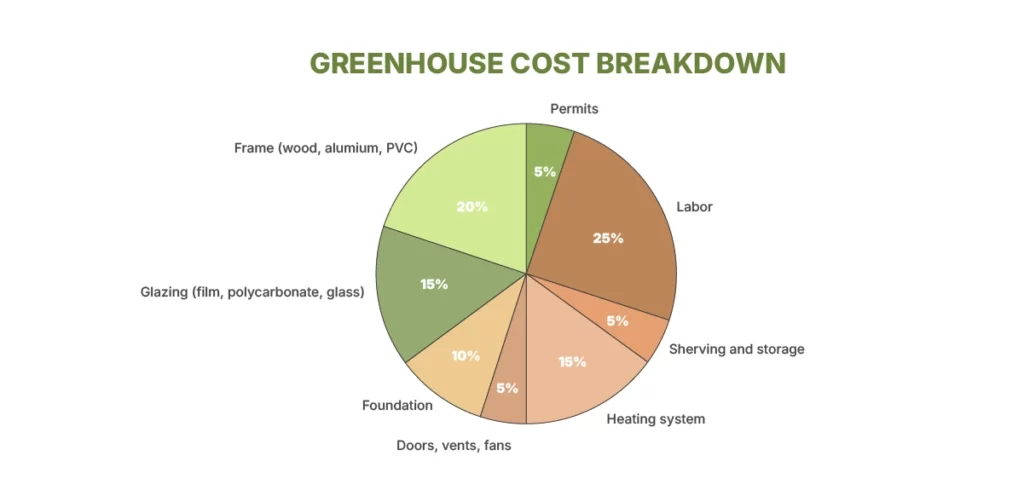
Estimated percentage breakdown of greenhouse construction costs by component
What Type of Greenhouse Should You Build?
If you’re a first-time gardener looking for a quick setup or a hands-on DIYer with tools and experience, the table below breaks down the key differences between DIY, kit, and pre-built greenhouses to help you choose the most practical option.
DIY vs. Kit vs. Pre-Built: At-a-Glance Comparison
| Greenhouse Type | Average Cost | Best For | Pros | Cons | Build Time |
| DIY (from scratch) | $500 – $1,500 | Experienced builders | Lowest cost, fully customizable | Labor-intensive, planning required | 2–7 days |
| DIY with Plans | $1,000 – $2,500 | Beginners who want guidance and savings | Affordable, guided steps, fewer mistakes | Still requires some labor and basic tools | 1–5 days |
| Kit | $2,000 – $5,000 | Busy gardeners | Fast setup, clear instructions | Less flexible in design, limited sizing options | 1–3 days |
| Pre-Built / Custom | $10,000 – $35,000+ | Homeowners with larger spaces and higher budgets | Turnkey, professionally installed | Most expensive, less hands-on control | None (built for you) |
Building your own greenhouse is usually cheaper than buying a pre-made one, especially for smaller structures. Yet, DIY projects need time, tools, and a bit of building knowledge.
Deciding Which Greenhouse Is Right for You
Choosing the right greenhouse setup depends on your budget, skills, and goals. Use this quick guide to explore the best option for your situation:
Budget under $2,000?
DIY from scratch or go with a simple kit.
- Have building experience? → DIY scratch build.
- First-time builder? → Choose a kit with step-by-step plans.
Budget between $2,000–$10,000?
Choose a quality kit or a partial professional installation.
- Want full customization? → DIY with premium materials.
- Prefer convenience? → Opt for a professional kit assembly.
Budget over $10,000?
Go for a full professional installation.
- Need year-round growing? → Add heating and insulation.
- Live in a mild climate? → Focus on greenhouse size and features.
Ongoing Greenhouse Costs: Maintenance, Heating, and Winterization
With a better grasp on what it’ll cost you to build a greenhouse, next let’s delve into how much most gardeners usually pay to own a greenhouse over time.
A greenhouse that costs $5,000 upfront may require approximately $150 per year in maintenance, $100 for occasional repairs, and $50 for added insurance coverage.
If you also factor in $333 per year in depreciation (based on a 15-year polycarbonate lifespan), the total cost of ownership comes closer to $633 per year, or about $11,330 over 10 years.
Winter Heating by Zone
When planning to grow crops year-round or if you live in a cold climate, it’s important to factor in the extra cost of keeping your greenhouse warm in winter.
While greenhouses naturally trap some solar heat during the day, they don’t always stay warm enough overnight, especially in colder regions or during freezing spells.
Heating a 300 sq ft greenhouse in winter costs $20–40/month in zones 6 to 7, and up to $200/month in zones 3 to 5 (USDA zones).
This will depend on your greenhouse materials and crops, but you can find the detailed estimates for your structure using the USDA virtual grower.
| USDA Zone | Winter Temps (°F) | Estimated Heating Cost | Insulation Needed |
| 3–5 | –30°F to 10°F | $100–$200/month | Essential |
| 6–7 | 10°F to 30°F | $20–$40/month | Recommended |
| 8+ | 30°F+ | $0–$20/month | Optional |
Materials That Help Retain Heat
Different materials can help reduce heating costs by improving insulation:
| Material | Purpose | Cost Range (per sq ft) | Notes |
| Bubble wrap (UV-stabilized) | Light insulation for glazing | $0.25 – $0.50 | Easy to apply, effective for DIY setups |
| Rigid foam board | Floor/wall insulation | $1.00 – $2.50 | Strong barrier, ideal for cold climates |
| Thermal curtains | Nighttime heat retention | $0.50 – $1.50 | Reduce overnight heat loss |
| Greenhouse heater | Active heating | $100 – $600 (per unit) | Electric or propane, sized by sq ft |
These additions may increase your cost of greenhouse operation, but they make it possible for you to grow plants, herbs, flowers, and more during winter, even in northern zones.
Common Winterization Upgrades
Winterizing a greenhouse often requires more than just sealing gaps. Based on your climate zone, you may need:
- Insulation materials: bubble wrap, foam boards, thermal curtains.
- Heaters: electric, propane, or solar-assisted units.
- Backup power for critical systems.
- Thermometers or thermostats to check the internal temperature.
Are Greenhouses Worth It?
If you’re wondering, are backyard greenhouses worth it? The answer is yes. For many gardeners, these stable structures are absolutely worth the money, time, and effort. According to the University of Minnesota Extension, winter greenhouses can yield an average return on investment (ROI) of approximately 7%.
While the upfront cost can vary, the long-term benefits often outweigh the investment, especially if you’re serious about growing more of your own food or extending your harvest beyond the typical outdoor season.
A well-planned greenhouse lets you:
- Grow food year-round, even in cold climates.
- Start seeds earlier and enjoy harvests longer into the fall.
- Protect plants from pests, wind, and unpredictable weather.
- Save money by reducing trips to the grocery store.
- Gain self-sufficiency by having more control over your food source.
Over time, a greenhouse pays for itself by helping you grow more, waste less, and reduce your dependency on store-bought produce.
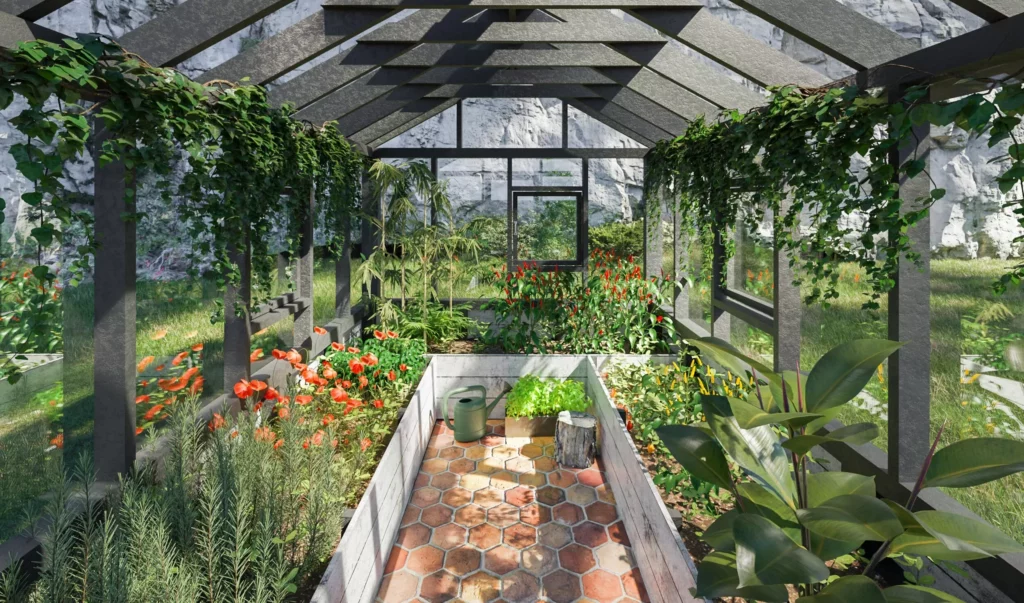 Craftcamp 8×10 DIY Greenhouse Plan With Raised Garden Beds
Even small backyard greenhouses can boost productivity and give you the freedom to grow delicate crops that wouldn’t survive in your climate otherwise.
4 Smart Ways to Save Money on Your Greenhouse Build
Building a greenhouse doesn’t have to drain your budget. With some smart choices and a bit of flexibility, you can cut costs without cutting corners. Here are some practical ways to save money during your build:
1. DIY Your Foundation and Base
Pre-built greenhouse bases and foundations can be expensive, but building your own with gravel, concrete pavers, or pressure-treated wood can significantly reduce overall costs. A simple gravel base with proper leveling and drainage is often more than enough for backyard greenhouses under 300 sq ft.
2. Use Recycled Materials
Reusing old windows, wood, and other salvaged materials is one of many budget-friendly greenhouse ideas that can lower costs without compromising functionality. Salvaged doors or framing materials are especially useful for DIYers who want a custom look while keeping expenses down.
Pro tip: Just make sure any reused wood is free of rot or pests, and that glass or plastic panels are UV-stable and safe for long-term outdoor use.
3. Start Small, Expand Later
If you’re new to greenhouse gardening or working with a limited budget, begin with a compact structure. Once you get the hang of it, you can always expand or upgrade your greenhouse layout. Modular designs or extendable frames make it easier to grow your space over time without starting from scratch.
4. Shop Off-Season or Look for Second-Hand Kits
Greenhouse kits and materials often go on sale in late summer or early fall, when the demand isn’t as high. You can also check local marketplaces or garden centers for returned or lightly used kits at reduced prices. Just be sure to inspect second-hand items carefully for rust, cracks, or missing parts before committing.
Want to Start Building? Get Free Plans to Guide Your Project
Not sure where to begin? Start by browsing different greenhouse plans to find the structure and layout that best fits your space, climate, and goals.
We’ve put together a collection of downloadable free greenhouse plans designed to help you get started. These plans offer step-by-step guidance, so you can build with more confidence and fewer surprises.
Greenhouse Costs: The Bottom Line
A greenhouse can be a big investment, but it pays off. Whether you’re building from scratch or choosing a kit, there’s a cost-effective option for every type of grower. Start small, plan wisely, and soon you’ll be harvesting more with less stress, in every season.